Queer Places:
University of London, Senate House, Malet St, London WC1E 7HU, United Kingdom
University of Cambridge, 4 Mill Ln, Cambridge CB2 1RZ
King's College London, Strand, London WC2R 2LS, United Kingdom
Cimetière de Territet, Av. de Chillon 92, 1820 Montreux, Switzerland
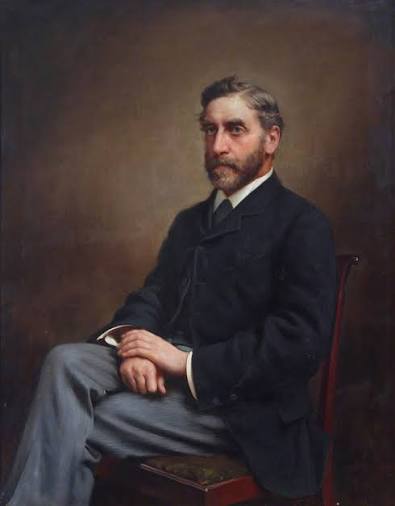 John Hopkinson (July 27, 1849 – August 27, 1898) was one of the late 19th century’s most brilliant British physicists, mathematicians, and electrical engineers. He is best
remembered for bridging theoretical physics and practical engineering—most notably through his invention of the three-wire system for electric power distribution and his
foundational work on dynamic machinery and optics.
John Hopkinson (July 27, 1849 – August 27, 1898) was one of the late 19th century’s most brilliant British physicists, mathematicians, and electrical engineers. He is best
remembered for bridging theoretical physics and practical engineering—most notably through his invention of the three-wire system for electric power distribution and his
foundational work on dynamic machinery and optics.
Born in Manchester into an engineering family, Hopkinson was the eldest son of John Hopkinson, a mechanical engineer, and Alice Dewhurst. Exhibiting rare mathematical
talent from an early age, he attended Owens College in Manchester before earning a scholarship to Trinity College, Cambridge, in 1867.
At Cambridge, Hopkinson achieved the highest mathematical distinction: He graduated top of the competitive Mathematical Tripos. Simultaneously earned his Bachelor of
Science (D.Sc.) from the University of London. Elected a Fellow of Trinity College, Cambridge. He was a member of the Cambridge Apostles.
Despite a promising trajectory toward pure academic mathematics, Hopkinson chose to apply his mathematical prowess directly to industrial engineering.
Hopkinson moved between industrial management, consulting, and academia, leaving a major mark on electrical engineering:
While managing the optical works at Chance Brothers in Birmingham, he introduced mathematical rigor to lighthouse illumination, inventing the group-flashing light
system to make lighthouses distinct and recognizable to navigators.
Patented a method allowing electrical power distribution with far lower copper losses, revolutionizing early municipal lighting networks.
Working alongside his brother Edward, he applied James Clerk Maxwell’s theories to design the Edison-Hopkinson dynamo
(achieving efficiencies over 90%) and mathematically proved that alternating current (AC) dynamos could run in parallel.
In 1890, he became Professor of Electrical Engineering at King's College London and director of the newly established Siemens Laboratory.
On 27 August 1898, at age 49, Hopkinson died in a mountaineering accident while ascending the Petite Dent de Veisivi in the Val d'Hérens, Switzerland. Tragically, three
of his children—his son John and daughters Alice and Lina—perished alongside him.
While Hopkinson’s academic and technical legacy is well documented, two common points of confusion frequently arise regarding his social circle and biography:
Hopkinson married Evelyn Oldenburg in 1873, with whom he had six children, and lived a conventional Victorian family life until his death. There are no historical,
biographical, or archival records linking him to LGBTQ figures, movements, or identity.
The Apostles society itself became famous in the late 19th and early 20th centuries for its prominent queer members and open attitudes toward homosexuality. Because the
Apostles are strongly tied to early British queer history, individuals associated with the society are often assumed to share those links.
References:
Other references:
- https://en.wikipedia.org/wiki/John_Hopkinson
- https://www.britannica.com/biography/John-Hopkinson
- https://mathshistory.st-andrews.ac.uk/Biographies/Hopkinson/
Support this project
This website is a passion project researched, developed, and funded entirely by me. If you find the content valuable and would like to help support the ongoing research and hosting costs, any contribution is deeply appreciated.
Thank you for keeping this independent resource alive!
My books on Amazon: Elisa Rolle's books
BACK TO HOME PAGE
